


Before you leave...
Take 20% off your first order
20% off
Enter the code below at checkout to get 20% off your first order
全店限時優惠9折

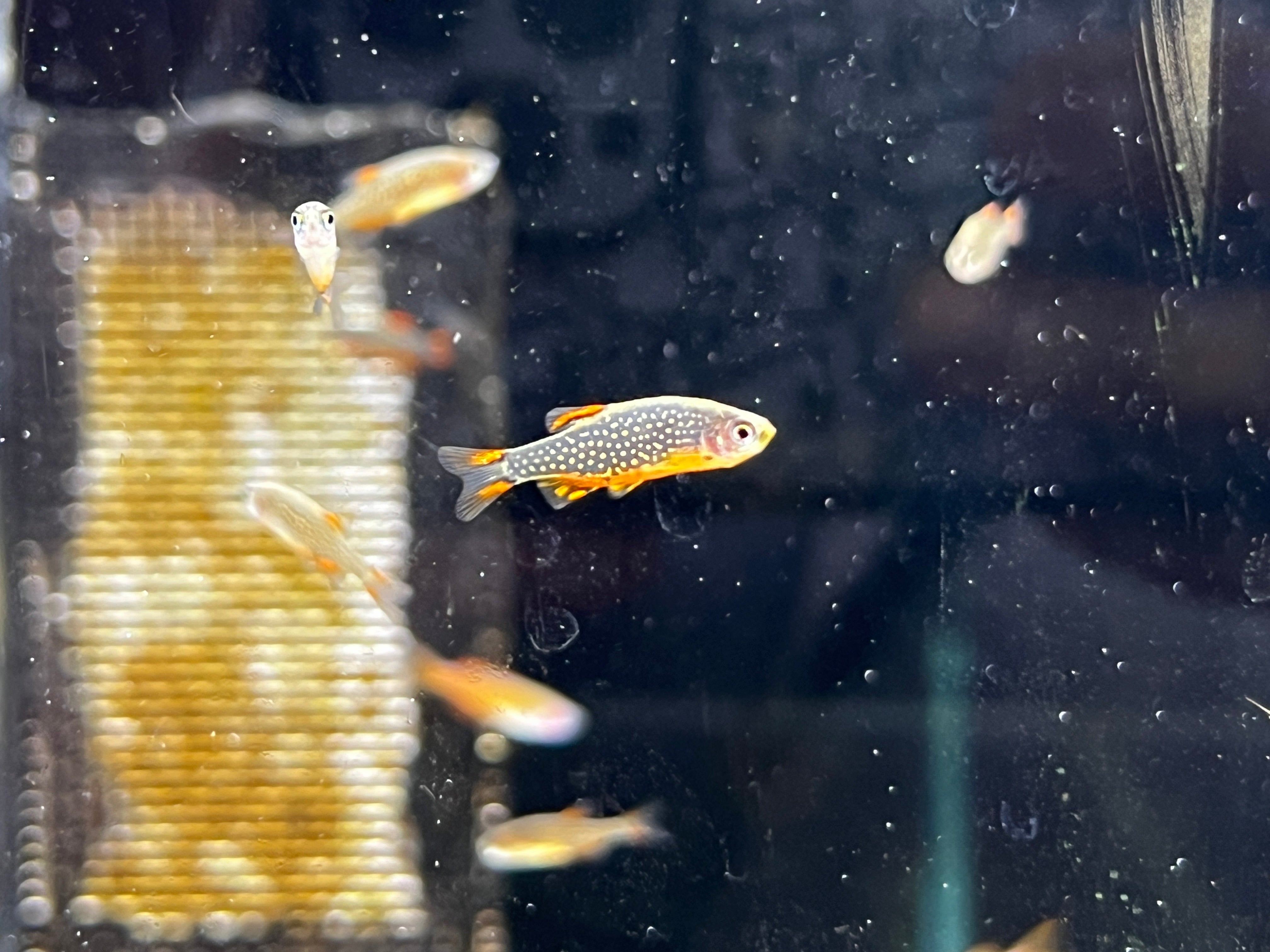
Family: Cyprinidae, subfamily: Danioinae
Order: Cypriniformes (carps)
Class: Actinopterygii (ray-finned fishes) Actinopterygii (ray-finned fishes)
English name: Galaxy Rasbora, Celestial Pearl Danio.
Aquatic name: Galaxy Zebra, Fire Wings Gold Diamond Lamp.
Body length: The maximum body length is about 3 cm.
Environment: Freshwater. ph: 7.0 - 7.5, dH: 6 - 9.
Climate: Tropical. 22-24°C.
Distribution: Asia: About 70 to 80 kilometers northeast of Lake Inle, the second largest alpine freshwater lake in Myanmar, on the outskirts of a small town called Hopong. Thanlwin River basin.
Characteristics: The dorsal fin, pelvic fin and tail fin have red and black patches. Small golden round spots cover the black body surface, just like a piece of black cloth inlaid with small gold. When the water quality is stable, the red color shows the beauty of bright red. Color and luster, the maximum body length in the wild is about 1.5 cm, and it can reach 3 cm in captivity. It has strong adaptability and is not picky about food. It can eat almost all the food that phoenix can eat and is easy to raise. It has a docile temperament and weak water quality. It is suitable for swimming in groups and mixed with other small fish. It is recommended to keep more than 5 fish at a time.
The male fish of the Fire Wing Golden Diamond Lamp are aggressive, very territorial, and have low tolerance and tolerance for other male fish. When mating, the male and female fish will get very close to each other, shake their bodies vigorously, and then get into the silk pusher together to lay eggs. , the viscosity of the eggs is not high and they will slip off if touched lightly. The Fire Fin Gold Diamond Lamp is egg-eating. Players can raise the breeding fish in a naked tank in a large square net sewn with fishnets. The fertilized eggs will fall to the bottom of the tank and can be retrieved. The fertilized eggs depend on the temperature, and usually hatch in 2-3 days. At the beginning, they use egg yolk water or very fine powder feed. After 14 days, nauplii larvae can be used. After about 3 months, they will become adult fish and can reproduce again.
Source: https://www.hkfishbook.com/articles/58820
Thanks for subscribing!
This email has been registered!
| Product | SKU | Description | Collection | Availability | Product Type | Other Details |
|---|
Take 20% off your first order
Enter the code below at checkout to get 20% off your first order